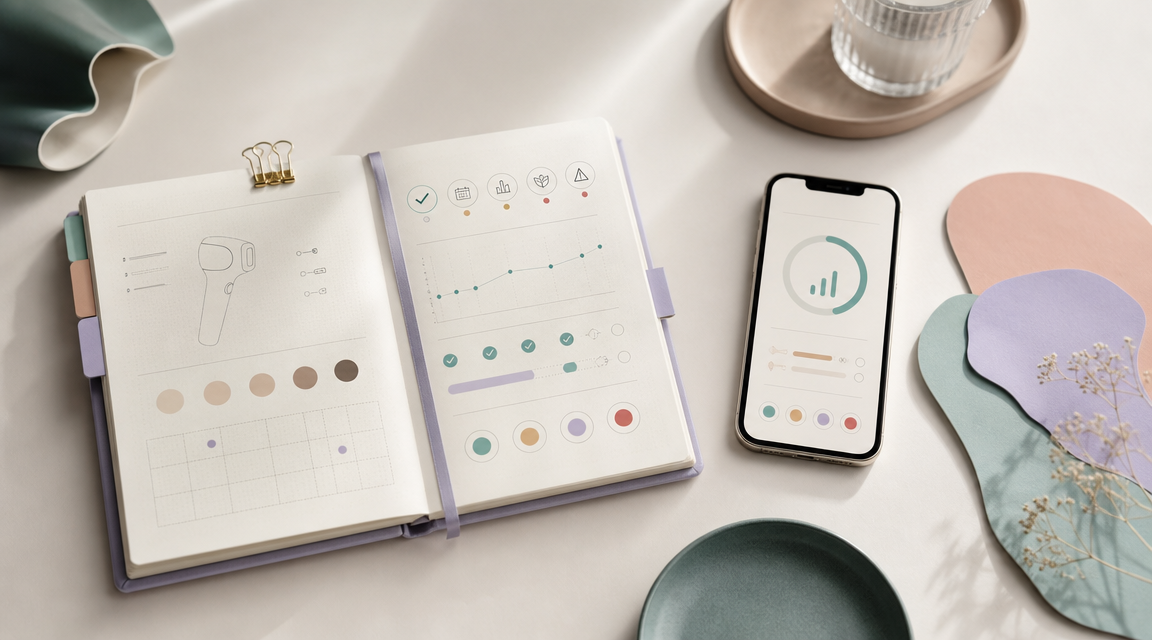
An at-home laser hair removal device log should record device name, label instructions, skin and hair context, dates, reactions, and questions for a qualified professional. It should not replace device labeling or medical advice. The FDA warns that some internet laser products may not meet safety requirements.
Log Notes. This is research and personal documentation only, not medical advice. It gives no dose, unit count, concentration, device setting, treatment site, injection method, peel application method, or procedure technique. Put candidacy, safety, and technique questions with a licensed professional.
What should a beginner understand first?
Laser hair removal devices vary, and not every device is appropriate for every skin tone, hair color, or body area. A beginner should start with device legitimacy and suitability before thinking about results.
The safest way to read this kind of topic is to separate three things: the treatment category, the record you keep, and the medical decision. A log can help you remember what happened. It cannot decide whether the session was appropriate, whether a product was legitimate, or whether a reaction is normal.
That matters for at-home aesthetics because beginner questions often sound practical: What do I need? What should I watch for? How long should I wait? The recordkeeping answer is allowed. The procedural answer belongs with a trained professional and the product or device labeling.
What questions should you ask before a session?
Ask whether the device is appropriate for your skin tone and hair color, what eye protection and safety instructions the label requires, and what reactions should stop use.
Write the answers down before the session, not afterward. Memory gets generous when you want something to work. A dated note is less flattering and more useful.
- Keep the device manual and model name in the record.
- Record skin tone and hair color context if relevant.
- Do not use a device that appears unsafe or unlabeled.
- Ask a dermatologist if you have a skin condition or medication concern.
What should you track afterward?
Track sessions as a series. Hair reduction claims are not judged from one day. Record dates, body area names, reactions, and whether irritation resolved as expected.
In Dosefi, you can keep a dated entry with notes, photos, face-map markers when relevant, and the next follow-up window. Use it as a private record of what you and a qualified professional already decided. Do not use any app, spreadsheet, or forum as a substitute for clinical judgment.
For a clean log, capture:
- Device model and session date.
- Area name and reaction notes.
- Redness, swelling, burns, pigment changes, or pain.
- Questions for a dermatologist or device support.
What warning signs should stop the plan?
Stop for burns, blistering, severe pain, eye exposure concerns, pigment changes, or reactions outside the device instructions.
Do not try to troubleshoot serious reactions from a comment thread. If symptoms are severe, spreading, painful, infected-looking, affecting vision or breathing, or simply outside the range your provider prepared you for, stop and seek appropriate care. The log can help you explain what happened.
What should you read next?
For broader device expectations, read Laser Hair Removal Patch Test Questions.
How should the record stay useful later?
Keep the entry boring and complete: date, product or device category, professional instructions, photos when useful, symptoms, and follow-up questions. Do not rewrite the entry to match the outcome you wanted. A useful record helps you explain the timeline later, especially when you need a professional to review it. Keep uncertainty in the note too. If you are unsure what happened, write that plainly instead of filling the gap with a guess or a forum answer.
Related reading
Sources
- Consumer Safety Alert: Internet Sales of Laser Products, FDA. FDA safety alert on laser products sold online.
- Laser hair removal: Overview, American Academy of Dermatology. AAD consumer overview of laser hair removal expectations and limits.